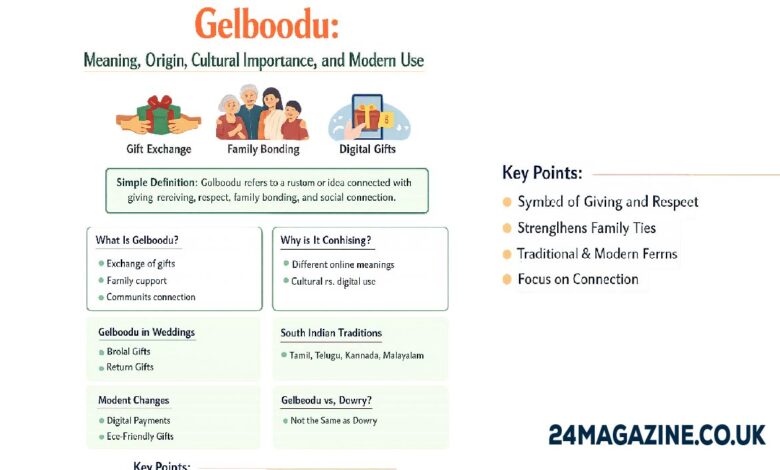
Gelboodu is a term that has started gaining attention online, but many readers are confused about what it really means. In some articles, Gelboodu is described as a cultural practice linked with gift exchange, family respect, and community bonding. In other places, the word appears in connection with online platforms and digital content communities. Because of these mixed explanations, it becomes important to clearly understand what Gelboodu actually refers to.
Unlike well-documented traditions, Gelboodu does not have a single, universally accepted definition. Its meaning often depends on the context in which it is used. In cultural discussions, it is usually associated with giving, sharing, and maintaining strong family relationships. In modern digital spaces, however, the same word may be used in completely different ways.
This article explains Gelboodu in a simple and clear manner. It covers its possible meaning, cultural background, modern changes, and why the term continues to attract attention today.
What Is Gelboodu?
Gelboodu is commonly understood as a concept connected with exchange, respect, and social connection. In a cultural context, it often refers to the exchange of gifts, goods, or support between families during important life events. These events may include weddings, festivals, housewarming ceremonies, or other family gatherings.
At its core, Gelboodu is not just about giving physical items. It represents a deeper idea of mutual respect and emotional connection. When families exchange gifts, they are not only sharing material things but also expressing goodwill and strengthening relationships.
In traditional settings, Gelboodu may involve both families participating in the exchange. For example, during a wedding, the bride’s and groom’s families may exchange gifts as a sign of acceptance and unity. Similarly, guests may receive return gifts as a gesture of appreciation.
In modern times, the meaning of Gelboodu can vary. Some people use the term in a digital context, where it may refer to online communities or platforms. This is why understanding the context is important when interpreting the term.
Gelboodu refers to a custom or idea connected with giving, receiving, respect, family bonding, and social connection. In modern usage, it may also appear in digital or online contexts.
Why Is the Meaning of Gelboodu Confusing?
One reason Gelboodu is difficult to understand is that the word is used in different ways online. Some websites describe it as a cultural or family-based tradition, while others use the same word for digital platforms or online communities. Because of this, the best way to understand Gelboodu is to look at the context in which the word is being used.
The lack of clear documentation also adds to the confusion. Unlike widely known traditions, Gelboodu does not have a strong presence in historical texts or academic research. Instead, much of its meaning comes from informal explanations found online.
Another reason for confusion is that different regions and communities may interpret the idea differently. What one group considers a traditional practice may not be recognized the same way by another group.
For readers, this means that Gelboodu should not be understood as a fixed or rigid concept. Instead, it is better viewed as a flexible term that can carry different meanings depending on cultural, social, or digital context.
Gelboodu Meaning in Simple Words
In simple words, Gelboodu can be understood as a symbol of giving and connection. It is about sharing something—whether it is a gift, support, or kindness—with others.
It is not limited to material gifts. Gelboodu can also represent emotional values such as respect, gratitude, and care. When families or individuals exchange gifts, they are also expressing their feelings and maintaining relationships.
In traditional settings, Gelboodu may involve both families exchanging items during special events. In modern settings, it can include digital transfers, gift cards, or symbolic gestures.
Examples:
- A family giving clothes or sweets during a wedding
- Guests receiving return gifts during a ceremony
- Relatives helping each other during an important life event
- A modern family sending money digitally instead of physical goods
These examples show that Gelboodu is not about the item itself but about the intention behind the act.
Possible Origin of Gelboodu
The exact origin of Gelboodu is not clearly documented. Unlike many traditional customs that have well-recorded histories, Gelboodu appears to be a concept that developed over time through social practices and community interactions.
It may be connected with older South Asian customs of gift exchange. In many parts of the region, families have long practiced giving and receiving items during important events. These exchanges were often linked with respect, hospitality, and social bonding.
Many Indian family traditions developed through village life, kinship systems, and ceremonial events. In such environments, maintaining relationships was very important, and gift exchange became a natural way to strengthen those bonds.
Because Gelboodu is often explained through oral tradition and modern interpretation, it is difficult to assign it a fixed time period. More research is needed before linking it to a specific century or historical event.
Instead of viewing Gelboodu as a practice with a single origin, it is more accurate to understand it as a developing social concept shaped by culture, tradition, and modern usage.
Gelboodu and South Indian Family Traditions
In the cultural interpretation of Gelboodu, it is often linked with family traditions found in South India. Family events in this region commonly include rituals of giving and receiving, which symbolize respect and unity.
During important occasions, families may exchange gifts to honor elders, welcome guests, or celebrate milestones. These exchanges are not only practical but also carry emotional and cultural meaning.
South India includes states such as Tamil Nadu, Karnataka, Kerala, Andhra Pradesh, and Telangana. Each region has its own language, customs, and traditions. As a result, the way Gelboodu is understood or practiced can vary.
In some communities, the exchange of gifts may be simple and symbolic. In others, it may be more elaborate and organized. Despite these differences, the core idea remains the same: building relationships through acts of giving.
Gelboodu, when viewed through this cultural lens, can be seen as part of a broader tradition of respect, hospitality, and family bonding.
Role of Gelboodu in Weddings
Weddings are one of the most common events where Gelboodu-like exchanges take place. These ceremonies bring together families, relatives, and communities, making them ideal occasions for sharing gifts and strengthening relationships.
During weddings, gifts may be exchanged between the bride’s and groom’s families. These exchanges symbolize acceptance, respect, and the beginning of a new bond between the two families.
Guests may also receive return gifts as a way of thanking them for attending the event. These gifts can be simple or elaborate, depending on the family’s preferences and resources.
Traditional Items:
- Sweets
- Clothes
- Jewelry
- Coconut and betel leaves
- Household items
- Decorative items
- Silver items
- Food baskets
Modern Items:
- Cash envelopes
- Gift cards
- Digital transfers
- Personalized hampers
- Useful home items
The purpose of these exchanges is not only economic. They reflect emotions such as gratitude, respect, and celebration. However, such practices mustn’t create pressure or become a competition.
Gelboodu in Festivals and Family Ceremonies
Gelboodu-style exchanges are not limited to weddings. They can also be seen in various family ceremonies and celebrations.
These may include:
- Housewarming ceremonies
- Naming ceremonies
- Birthdays
- Engagements
- Religious gatherings
- Community festivals
- Baby showers
During these events, families often give and receive gifts to mark the occasion. These exchanges help create a welcoming environment and strengthen social ties.
They also play an important role in passing down cultural values. Younger generations learn the importance of respect, generosity, and connection through these practices.
Common Items Used in Gelboodu
| Traditional Items | Modern Items |
|---|---|
| Sweets | Gift cards |
| Clothes | Digital money transfers |
| Coconut | Personalized hampers |
| Betel leaves | Online gift vouchers |
| Jewelry | Home decor |
| Silver items | Eco-friendly gifts |
| Food baskets | Charity donations |
The item itself is less important than the intention behind it. A small gift given with sincerity can carry more meaning than an expensive item given only to show status.
Cultural Significance of Gelboodu
Gelboodu holds cultural importance because it represents more than just an exchange of goods. It reflects values that are central to many families and communities.
It strengthens family bonds by encouraging interaction and cooperation. Its creates a sense of belonging by bringing people together during important events. It also shows respect between families, especially during occasions like weddings.
Gelboodu supports social harmony by promoting kindness and generosity. It helps preserve cultural memory by continuing traditions across generations.
Most importantly, it adds emotional value to life events. A simple act of giving can carry deep meaning when it is done with care and intention.
“Gelboodu is meaningful because it turns a simple exchange into a social message. The gift says, ‘We respect you, we value this relationship, and we want to stay connected.’”
Gelboodu in Rural and Urban Life
In rural areas, Gelboodu-like practices are often more traditional. Families may follow established customs, and elders may guide the process. Gifts are usually tangible, and ceremonies may be more formal.
In urban areas, the practice has adapted to modern lifestyles. Gatherings may be smaller, and gifts may be more practical. Online payments and digital gifts are common.
However, the purpose remains the same. Whether in a village or a city, the idea of giving and maintaining relationships continues.
Modern Changes in Gelboodu
Modern Gelboodu is not always limited to physical items. Many families now use online transfers, gift cards, and customized hampers. This does not reduce its emotional value. Instead, it shows how traditions adapt to changing times.
Other changes include:
- E-commerce gifting
- Eco-friendly options
- Smaller ceremonies
- Social media influence
- Gift registries
These changes reflect convenience and modern preferences while maintaining the core idea of connection.
Gelboodu and Social Status
In some cases, the value of gifts may be linked with social status. Larger or more expensive exchanges may be seen as a sign of wealth.
However, this can create pressure and lead to unnecessary competition. A healthy approach focuses on respect and intention rather than material value.
Cultural practices should not become financial burdens.
Is Gelboodu the Same as Dowry?
Gelboodu should not be confused with dowry. A voluntary exchange of gifts based on goodwill is different from a forced or demanded transfer of wealth.
If any exchange becomes compulsory or exploitative, it loses its positive meaning. The focus should always remain on respect and mutual understanding.
Gelboodu vs Return Gifts
Return gifts are usually given by hosts to guests as a token of appreciation. Gelboodu, in a broader sense, may involve exchange between families.
Both practices express gratitude, but return gifts are typically simpler and event-based.
Common Misunderstandings About Gelboodu
- Gelboodu has only one meaning — it depends on context
- Gelboodu is always ancient — its origin is unclear
- It is only about expensive gifts — intention matters more
- It is practiced the same everywhere — customs vary
- It is only offline — modern forms include digital exchanges
How to Practice Gelboodu Respectfully Today
- Keep gifts within your budget
- Focus on meaning, not price
- Respect both families
- Avoid forcing anyone
- Choose useful gifts
- Follow family traditions
- Keep it simple and joyful
- Avoid competition
Why Gelboodu Still Matters
Gelboodu still matters because it keeps relationships strong. It connects generations and adds meaning to important events.
Even as lifestyles change, the idea of giving and sharing remains important. It helps people stay connected and appreciate each other.
Conclusion
Gelboodu is a meaningful but complex term with different interpretations. In cultural contexts, it represents giving, respect, and family bonding. In modern usage, it may also appear in digital spaces.
Its exact origin is not clearly documented, so it should be understood carefully rather than assumed. Over time, Gelboodu has adapted to modern life, including digital gifting and changing social practices.
Whether traditional or modern, the core idea remains the same: connection. Gelboodu reminds us that even simple acts of giving can carry deep emotional meaning and help build lasting relationships.