
Repmold: The Complete Guide to Precision Injection Molding Solutions (2026)

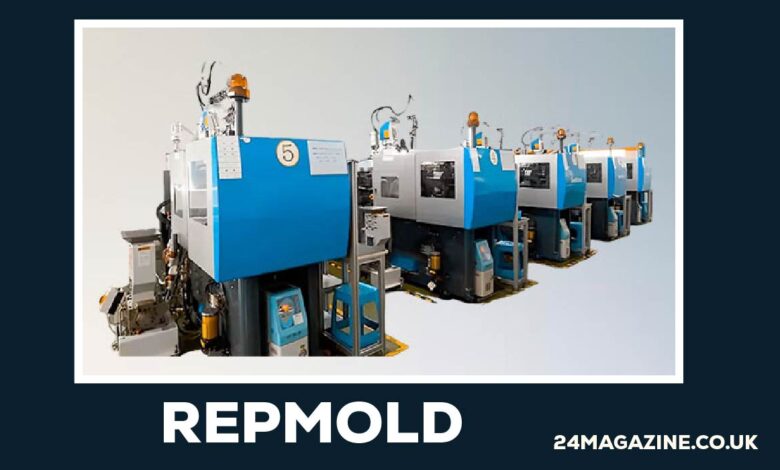
In modern manufacturing, product success is no longer defined solely by design—it is defined by precision, consistency, and scalability. Whether it’s an automotive component, a medical device, or a consumer electronic product, even the smallest deviation in manufacturing can lead to costly failures. This is where high-precision molding solutions like Repmold play a critical role.
Industries such as automotive, healthcare, electronics, aerospace, and consumer goods rely heavily on advanced molding systems to deliver consistent, high-quality components at scale. However, manufacturers often face persistent challenges, including inconsistent product quality, rising production costs, and limitations in scaling operations efficiently.
Repmold addresses these issues by offering a refined approach to injection molding—combining precision engineering, optimized material usage, and high-efficiency production cycles. Rather than being just a tool, Repmold acts as a strategic manufacturing asset that enables businesses to achieve both technical excellence and cost efficiency.
This guide provides a comprehensive overview of Repmold, including how it works, advanced technologies involved, material selection strategies, and how to leverage it effectively for modern production needs.
What is Repmold?
Repmold refers to a precision-engineered injection mold system designed to produce high-volume parts with tight tolerances and consistent quality. It represents a higher standard of mold manufacturing where design accuracy, durability, and production efficiency are prioritized.
From a technical perspective, Repmold is not strictly a single brand but rather a category or approach to high-performance molding solutions. It integrates advanced mold design techniques, high-quality materials, and optimized production processes to achieve superior outcomes.
Repmold vs Standard Molds
Traditional molds are often designed for basic functionality and moderate production runs. In contrast, Repmold-grade molds are engineered for:
- High-volume production
- Precision tolerances (often ±0.01 mm)
- Enhanced durability and lifecycle
- Optimized cycle times
Real-World Analogy
Think of a standard mold as a conventional production tool, while Repmold is like a high-performance industrial machine—fine-tuned, optimized, and built for efficiency at scale.
Key Takeaways
- Repmold focuses on precision and repeatability
- Designed for high-volume manufacturing
- Integrates advanced engineering and material science
Quick Insight: If your production requires consistency, scalability, and tight tolerances, Repmold is not optional—it’s essential.
How Repmold Works
Mold Design Engineering
The process begins with advanced design tools such as CAD and CAE software. Engineers use mold flow analysis to simulate how molten material behaves inside the mold. This helps identify potential defects like air traps, uneven cooling, or material shrinkage before production begins.
Material Selection Strategy
Material selection is not just about availability—it involves analyzing:
- Mechanical strength requirements
- Thermal resistance
- Chemical exposure
- Cost efficiency
Choosing the wrong material can compromise both product performance and mold lifespan.
Injection Phase
Molten material is injected into the mold cavity under controlled pressure and temperature. Optimizing these parameters ensures:
- Proper filling of complex geometries
- Reduced defects
- Improved surface finish
Cycle time optimization also plays a crucial role in productivity.
Cooling & Solidification
Cooling is one of the most critical stages. Advanced Repmold systems often use optimized cooling channels to ensure uniform heat dissipation, reducing warping and improving structural integrity.
Ejection & Finishing
Once solidified, the part is ejected using automated systems. Robotics are often integrated to improve speed and reduce human error. Post-processing may include trimming, coating, or assembly.
Advanced Repmold Technologies
Modern Repmold solutions incorporate cutting-edge technologies that significantly enhance production capabilities.
Multi-Shot (2K / 3K Molding)
Allows multiple materials to be injected in stages, enabling complex, multi-functional parts.
Micro Injection Molding
Used for extremely small components with tolerances measured in microns—ideal for medical and electronics industries.
Gas-Assisted Molding
Injects gas into the mold to reduce material usage, minimize weight, and improve structural strength.
Conformal Cooling
Unlike traditional straight-line cooling channels, conformal cooling follows the shape of the mold, improving heat transfer efficiency and reducing cycle time.
Overmolding & Insert Molding
- Overmolding: Combines soft and hard materials
- Insert molding: Integrates metal or components into plastic parts
Smart Molds (IoT Integration)
Sensors embedded in molds monitor temperature, pressure, and wear in real time, enabling predictive maintenance and quality control.
Technology Comparison
| Technology | Use Case | Benefit | Cost Level |
|---|---|---|---|
| Multi-shot | Multi-material parts | Enhanced functionality | High |
| Micro molding | Medical/electronics | Ultra precision | High |
| Gas-assisted | Large parts | Material savings | Medium |
| Conformal cooling | Complex molds | Faster cycles | Medium |
| Smart molds | High-end production | Real-time monitoring | High |
Materials Used in Repmold
Thermoplastics
Common options include:
- Polypropylene (PP) – lightweight and chemical-resistant
- ABS – strong and impact-resistant
- Polyethylene (PE) – flexible and durable
- Polycarbonate (PC) – high strength and transparency
- Nylon (PA) – wear-resistant and durable
- PEEK – high-performance, heat-resistant
Thermosets
- Epoxy resins
- Phenolic materials
These offer excellent heat resistance and structural integrity.
Metals (Metal Injection Molding)
Metal injection molding (MIM) differs from plastic molding by using powdered metals mixed with binders. It is ideal for high-strength, heat-resistant components.
Composite Materials
Fiber-reinforced plastics provide high strength-to-weight ratios, widely used in aerospace and automotive applications.
How to Choose the Right Material
Consider:
- Mechanical requirements
- Environmental conditions
- Production volume
- Budget constraints
Advantages of Repmold
Cost Efficiency
At scale, production costs can decrease by 30–60%, making it highly economical for large runs.
High Precision
Achieves tolerances as tight as ±0.01 mm, essential for critical applications.
Faster Production
Optimized cycles reduce manufacturing time significantly.
Design Flexibility
Supports complex geometries and intricate designs.
Reduced Waste
Efficient material usage minimizes waste and improves sustainability.
Challenges & Limitations
High Initial Tooling Cost
Solution: Amortize costs over large production volumes.
Mold Wear
Solution: Use hardened steel and advanced coatings.
Limited Flexibility for Small Runs
Solution: Adopt modular or rapid tooling strategies.
Industries Using Repmold
Automotive
Used for dashboards, connectors, and structural parts.
Medical
Produces sterile components like syringes and micro devices.
Electronics
Manufactures housings, connectors, and precision components.
Consumer Goods
Used in packaging, appliances, and everyday products.
Aerospace
Produces lightweight, high-strength components.
Repmold vs Traditional Injection Molding
| Feature | Repmold | Traditional Mold |
|---|---|---|
| Precision | High | Medium |
| Cost Efficiency | Better at scale | Lower upfront |
| Speed | Faster cycles | Slower |
| Complexity | High | Limited |
How to Choose the Right Repmold Partner
Selecting the right partner is critical for success.
Key factors include:
- Proven industry experience
- Material expertise
- Design and engineering support
- Production scalability
- Quality certifications (ISO standards)
A reliable partner ensures consistent output, reduced defects, and long-term cost savings.
Future Trends in Repmold Technology
- AI-driven mold optimization
- 3D-printed molds for rapid tooling
- Sustainable and recyclable materials
- Industry 4.0 integration with smart factories
Conclusion
Repmold represents the future of precision manufacturing. By combining advanced engineering, efficient production processes, and material versatility, it enables businesses to achieve unmatched quality and scalability.
While initial costs may be higher, the long-term benefits in terms of efficiency, consistency, and cost reduction make it a valuable investment.
If your goal is to produce high-quality components at scale, adopting Repmold technology is a strategic decision that can significantly enhance your manufacturing capabilities.
Choose the right Repmold solution today to stay competitive in an increasingly precision-driven market.
